Challenge
A manufacturing company was drowning in manual inventory tracking across their WooCommerce store. Every purchase order required human intervention, stock levels lived in spreadsheets that were always out of sync, and tracking down late payments meant chasing customers by hand. The result? Delayed shipments, frustrated buyers, and cash flow problems because terms weren't enforced consistently. They needed automation that actually worked for their business, not a patchwork of generic plugins that couldn't talk to each other.
Solution
We built a custom WooCommerce integration that automated their entire order-to-cash cycle. Purchase orders now generate automatically when stock hits reorder points, inventory syncs in real time across their store and warehouse system, and payment terms get enforced through automated reminders and account holds for overdue balances. The owner stopped spending 15 hours a week on inventory spreadsheets, late payment collections dropped from 45 days to 12, and they cut stockouts by 80% in the first quarter.
The Setup
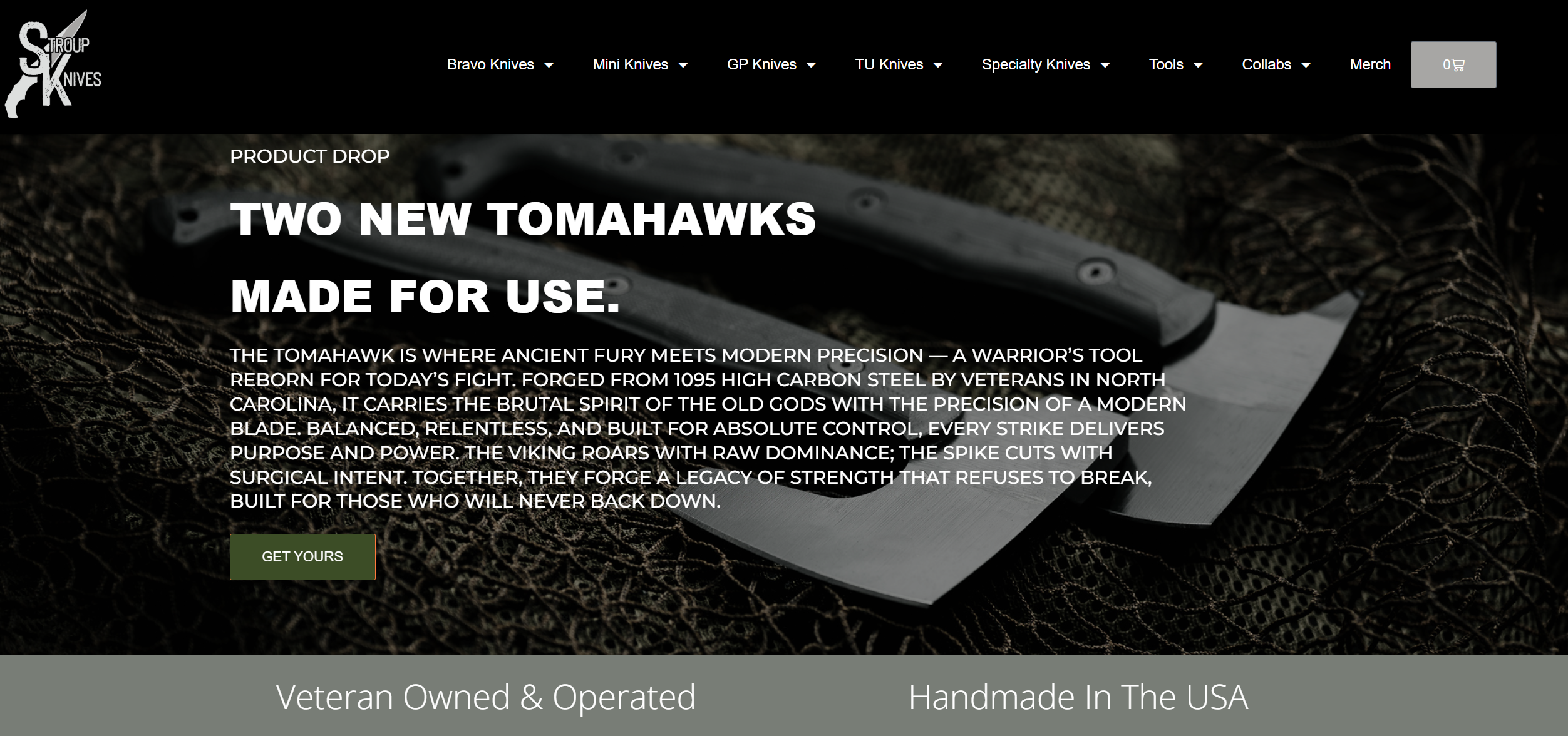
Stroup Knives is a manufacturer running on WooCommerce. They make a real product, ship a lot of orders, and like most manufacturers their size, they had built their operations around a stack of plugins, spreadsheets, and human attention. The plugins did not talk to each other. The spreadsheets were always one update behind reality. The human attention was the owner, every morning, for an hour and a half before he could do anything else.
That is a fine setup at five orders a day. It does not scale.
The Problem
Three things were breaking at once.
Inventory was a guess. Stock levels lived in a spreadsheet someone had to remember to update. Reorder points existed only in the owner's head. Stockouts happened often enough that customers had stopped being surprised by them, which is a worse signal than the stockouts themselves.
Purchase orders were manual. Every PO required a human to notice that something was running low, pull up a supplier portal, fill in line items, and send it. Half the time it happened a week late. The other half, two people did it and the company over-ordered.
Accounts receivable was a part-time job. Payment terms existed on paper but were enforced by feel. Late customers were chased by hand, by email, when somebody got around to it. The average late invoice took 45 days to collect. That is a cash flow problem before it is anything else.
What they wanted was not another plugin. They had tried generic plugins. The plugins did not talk to each other and none of them understood manufacturing. They wanted automation that actually fit their business.
What We Built
A custom WooCommerce integration that runs the entire order-to-cash cycle without anyone having to babysit it.
- Real-time inventory sync between the WooCommerce store and the warehouse system. One source of truth, updated as orders ship and stock arrives. The owner stopped opening spreadsheets in the morning because there was nothing to update.
- Auto-generated purchase orders. When stock on a SKU drops to its reorder point, the system drafts a PO with the right supplier, the right quantities, and the right pricing, and routes it for one-click approval. No more late orders. No more double orders.
- Automated AR enforcement. Payment terms are coded into the system per customer. When an invoice approaches its due date, the system sends a reminder. When it goes past due, the system places an account hold and notifies the owner. The owner stopped chasing customers because the system was already chasing them.
- An audit trail on everything. Every stock adjustment, every PO, every account hold is logged with who, what, and when. The kind of paper trail you do not appreciate until the day you need it.
Total build time: 5 days.
The Numbers
First quarter after deployment:
- Stockouts dropped by 80%. Real-time inventory plus automated reorder thresholds means the things customers want are on the shelf when they want them.
- Late-payment collection cycle dropped from 45 days to 12. Automated reminders and account holds did the work that used to take a person half a day a week, and they did it consistently.
- The owner got 15 hours a week back. Inventory spreadsheets, manual POs, and AR chasing were where his time was going. Now they are not.
Why It Worked
Generic plugins fail manufacturing because they are built for a generic e-commerce store. The reorder logic that works for a t-shirt brand does not work for someone who has to buy steel, blanks, and handle materials with different lead times and different suppliers. The AR cycle that works for a B2C store does not work when half your customers are wholesale on net-30 terms.
The win here was not the technology. It was building automation that fit the actual flow of the business, not retrofitting the business to fit the automation. That is the difference between a plugin you bought and a system that is yours.
Five days of build, sixty days of compounding wins. That is the math we look for.