Insights on AI, SEO & Digital Marketing

How to Implement Governance for AI Agents in Workflows
Implementing governance for autonomous AI agents requires four core layers: permission controls, human-in-the-loop approval gates, safety guardrails, and compliance monitoring. This guide walks through the specific tools, configurations, and workflows teams use to deploy agentic AI systems safely in production environments.

How to Fine Tune an LLM for Free Using Google Colab
You can fine-tune a large language model for free using Google Colab's T4 GPU and Unsloth, a memory-efficient framework that makes training 2× faster than standard methods. The process takes about 30 minutes total and uses LoRA adapters to train only 1-2% of the model's parameters, reducing memory requirements from hundreds of gigabytes to under 16 GB. You'll end up with a 60 MB adapter file that customizes models like Llama or Gemma for your specific use case.

Khanmigo vs MagicSchool Review K-12: Honest Comparison
Khanmigo excels at student-facing AI tutoring with strong content guardrails, while MagicSchool wins for teacher productivity and lesson prep. Both platforms cost 40-60% more than advertised once you factor in training, IT setup, and ongoing support. This honest review breaks down real implementation costs, teacher time savings, and which platform fits your school's actual needs.

What Is Siri 2.0 with Google Gemini and How Does It Work
Siri 2.0 powered by Google Gemini replaces Apple's voice assistant with conversational AI that understands context, remembers follow-up questions, and sees what's on your screen. Rolling out Q4 2026, this update brings Gemini 4's natural language processing to over 2 billion Apple devices through an automatic software update.

How to Use AI Agents to Build Software with Spec Driven Development
Replace ad-hoc vibe coding with a structured, spec-driven workflow for AI agents by creating four core documents before any code is written: Constitution, plan.md, requirements.md, and validation.md. This approach shifts your role from writing code to orchestrating AI agents that follow explicit instructions, eliminating the 60% time waste from re-explaining context and ensuring consistent, production-ready software development.

Why AI Tutoring Pilots Fail in Schools (And How to Fix It)
AI tutoring pilots in schools fail most often between weeks 2 and 6, with faculty usage dropping 60% after launch. The root cause is almost never the technology-it's operational breakdowns in adoption loops, faculty buy-in, and structured communication. These failure patterns are fixable if you know what actually broke.

How to Use AI Agents as a Team Instead of Single Tools
You're shifting from asking AI a single question to orchestrating multiple AI agents that work together like a specialized team. Google DeepMind's recent release demonstrates this paradigm: a manager agent receives your task, delegates to specialist agents, and coordinates revisions until complete. Instead of prompting an AI tool repeatedly, you're now managing an autonomous team that handles complex workflows end to end with minimal supervision.

How to Become a GenAI Engineer in 2025: Complete Roadmap
If you're a developer or data professional looking to transition into GenAI engineering, you're targeting a field where salaries range from $150K to $300K+ and demand is outpacing supply. This guide maps the complete learning journey from foundational Python through production deployment, with concrete skill milestones at each stage and real-world project requirements that employers actually care about.

AI Vendor RFP Template for Mid-Market Companies
Most mid-market companies use generic RFP templates that collect information without exposing red flags in AI vendor relationships. This guide provides a 9-section framework designed to make vendors with something to hide disqualify themselves before you waste time on demos and negotiations. Learn how to filter AI vendors based on data handling, pricing transparency, and security practices that matter at $25K to $250K annual spend.

AI Consulting Cost Private Schools & Colleges 2026
AI consulting for private schools and colleges typically costs between $12,000 and $25,000 for starter projects, $40,000 to $90,000 for multi-department rollouts, and $120,000+ for campus-wide transformation. The actual price depends on how many departments you're touching, integration complexity with existing systems, and staff training requirements. Most independent schools waste money comparing proposals written for large universities against budgets sized for small campuses.
AI Acceptable Use Policy for Small Business (2026)
Most small businesses either have no AI policy or a 30-page document employees ignore. Learn how to create an AI acceptable use policy that employees actually read and follow—covering the 7 essential sections, common mistakes that create liability, and compliance requirements for companies with 50-200 employees.

AI Implementation Failure Examples Mid-Market Companies
Mid-market companies are failing at AI implementation not because they picked the wrong technology, but because they treated AI procurement like buying traditional software. Real examples from accounting firms, franchise operators, logistics companies, and law practices reveal the procurement, contract, and change management mistakes that turn defensible technical decisions into catastrophic failures.

How to Make Your Business Show Up in AI Search Results
When someone asks ChatGPT or Claude for a business recommendation, AI assistants look for specific signals across the internet to make their suggestions. If your business isn't generating those signals, you're invisible to this growing search channel. Learn the deliberate strategy you need to optimize your business for AI search results and get recommended by AI assistants in 2025.

How to Edit AI Generated Images Without Regenerating
ChatGPT regenerates your entire image when you ask for simple changes because PNG files store images as fixed pixels. By requesting SVG output instead, you get editable code where each element can be modified independently without touching the rest of your design.

How to Build Visual Search with CLIP Embeddings Step by Step
You can build a production-ready visual search system using OpenAI's CLIP model that runs entirely on your own hardware without any API costs or cloud dependencies. This tutorial walks you through installing CLIP locally, generating embeddings from your product images, storing them in a vector database, and exposing search functionality through a FastAPI endpoint. The entire stack runs on a single server with a GPU, giving you Pinterest-style visual search capabilities for roughly $0.50 per day in compute costs.

AI for Beginners No Jargon: How It Actually Works
AI is a prediction engine, not a thinking machine. This guide explains how AI works, when to use it in business, and the real differences between ChatGPT, Claude, and Gemini-without the jargon or hype.
How to Get AI to Generate HTML Instead of Markdown
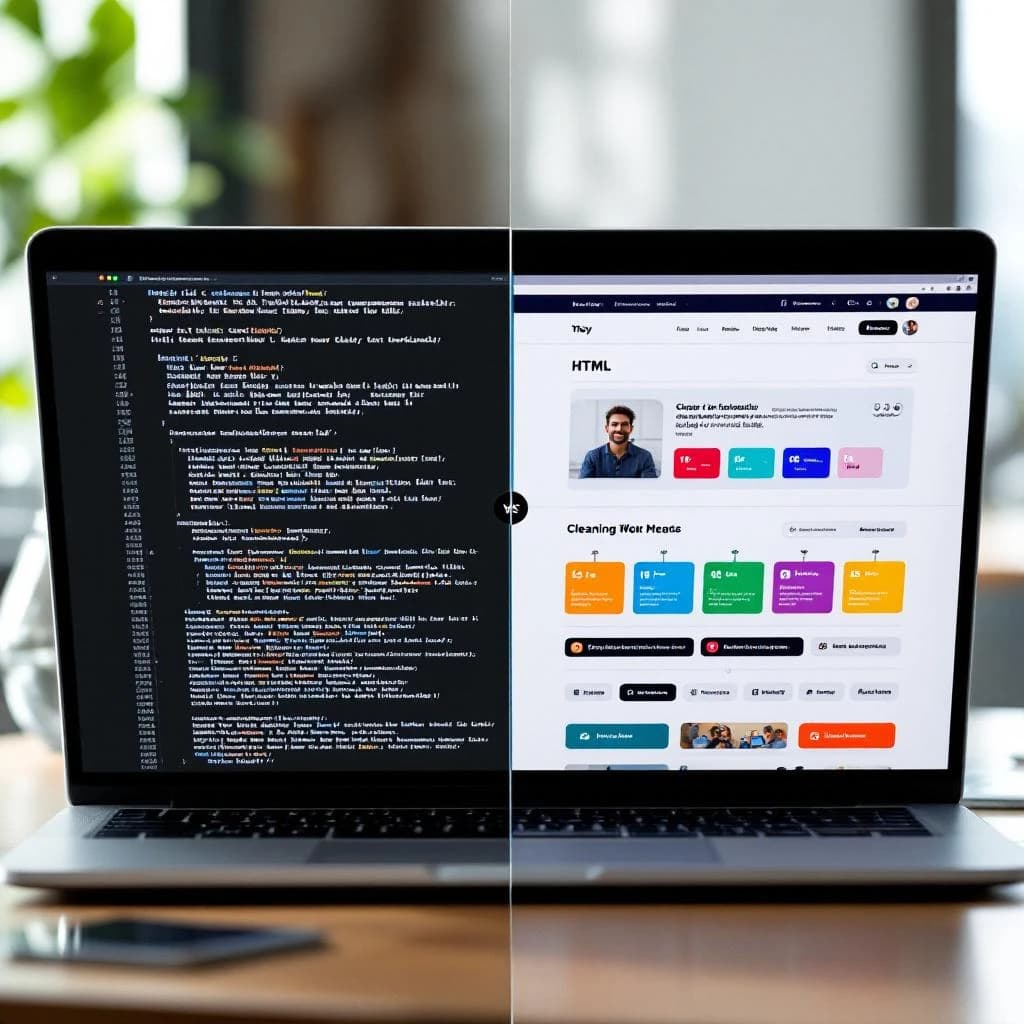
You can get AI tools like Claude and ChatGPT to generate HTML-formatted outputs instead of markdown by explicitly requesting HTML in your prompt and specifying the exact elements you need. This approach transforms AI outputs from basic text into presentation-ready documents, interactive dashboards, and shareable reports that work immediately in browsers without additional formatting.

How to Use OpenAI GPT Realtime for Phone Calls
OpenAI's GPT-Realtime suite includes three tools that transform phone calls: GPT-Realtime-2 for adaptive voice conversations, GPT-Realtime-Translate for live two-way translation across 70+ languages, and GPT-Realtime-Whisper for real-time speech transcription. You can deploy these for customer service automation, international communication, or meeting documentation without writing code using integrated platforms or build custom solutions through OpenAI's API.

How to Structure a Production AI Application Folder
Building AI applications that run reliably at scale requires more than a single app.py file with a FastAPI wrapper. Production AI systems need distinct layers for retrieval pipelines, query routing, semantic caching, agent orchestration, observability, and security. This guide shows you exactly how to organize production-grade AI applications with proper separation of concerns, testing infrastructure, and scalability built in from day one.

How Large Language Models Work: Beginner's Guide
Large language models work by breaking your text into tokens, processing them through transformer neural networks, and predicting what comes next based on patterns learned from billions of training examples. This beginner-friendly guide walks through the mechanics step by step, from tokenization to why models hallucinate, so you can write better prompts and understand what these AI tools can actually do.

How to Secure AI Coding Agents in Enterprise Workflows
AI coding agents with repository access and shell execution need security controls beyond traditional CI/CD permissions. Learn how to implement bounded sandboxes, auto-review systems, explicit network policies, and intent-based observability to protect your enterprise workflows from autonomous agent risks.

How to Optimize Your Website for ChatGPT & AI Search
Your website might rank on page one of Google but still be invisible when someone asks ChatGPT or Perplexity for recommendations. AI search engines interpret your entire brand presence to decide if you're relevant and trustworthy. This guide shows you exactly how to structure your website so AI tools can accurately understand who you are, what you offer, and who you serve.

How Neural Networks Organize Knowledge Internally
Neural networks don't just process information through layers—they organize knowledge like interconnected concept maps where related ideas cluster together. Goodfire's research reveals that AI models traverse semantic pathways similar to how humans organize knowledge. Understanding this internal structure changes how you should approach prompting, fine-tuning, and trusting AI outputs.

How to Use Multimodal RAG to Analyze PDF Documents
Multimodal RAG lets you analyze PDF documents with charts and tables by converting pages to images and feeding them to vision-capable AI models like Gemini Vision or GPT-4V. This approach captures visual insights that traditional text extraction misses, processing a 20-page annual report in roughly 2 minutes using free API tiers.