Insights on AI, SEO & Digital Marketing

What Does AI Cost a 50 Person Company? Full Breakdown
AI costs for a 50-person company typically range from $25,000 to $220,000 in the first year, depending on implementation scope. This includes software licenses, build and integration costs, internal time investment, and change management—not just subscription fees. Most companies miss 60-70% of real AI spend when preparing their first budget request.

CNN RNN LSTM Differences: Neural Networks Explained
CNNs recognize spatial patterns in images, RNNs process sequential data but struggle with long-term memory, and LSTMs solve that memory problem with specialized gates. Understanding the difference between CNN, RNN, and LSTM neural networks helps you choose the right architecture for image recognition, time series, or context-dependent AI tasks.

Run LLM Locally on Mac Without API Key Using Ollama
You can run powerful LLMs like Qwen 3 8B on your Mac without API keys, cloud subscriptions, or compiler configuration by installing Ollama. This tutorial covers hardware requirements, installation steps, and realistic limitations so you can set up a fully functional local AI system on your MacBook with 16GB+ unified memory.

How to Test If Your AI Agent Works Using Evaluation Harness
Building an evaluation system for AI agents means creating a repeatable testing framework that measures whether your agent actually does what it claims. Production LLMOps teams use tools like Langfuse, Weights & Biases, and custom scoring functions to track performance metrics, compare model versions, and catch failures before they reach users. This guide walks through building each piece using real tools and code.

What Do AI Terms Like Prompt, RAG, Embeddings Mean?
AI practitioners use terms like prompts, RAG, embeddings, and LoRA constantly, but rarely explain them clearly. This guide breaks down nine confusing AI terms with plain-English definitions and specific examples that show you exactly when and how to use each concept in practice.

How ReAct Loops Work in AI Agents & When to Use Them
The ReAct loop is a sequential pattern where AI agents reason, act, and observe in cycles to solve complex tasks. Unlike parallel tool calling, ReAct handles conditional logic where one tool's output determines the next action. Understanding when to use each approach optimizes your agent's cost, latency, and decision-making capability.

Agentic Loops, MCP & AI Guardrails Explained for 2026
You're about to build AI systems that operate autonomously, route requests across multiple models, and run reliably in production. This guide explains agentic loops, Model Context Protocol (MCP), AI gateways, and guardrails with specific implementation details for 2026. Learn the advanced AI concepts that go far beyond prompt engineering.

How to Reduce AI Costs Without Sacrificing Quality
You can cut AI API costs by 40-60% without sacrificing output quality by routing simple tasks to cheaper models and managing context windows efficiently. The key is matching task complexity to model capability rather than sending everything to expensive frontier models. Most businesses waste money routing basic tasks to GPT-4 or Claude Opus when these work perfectly well on models that cost 90% less.

How to Build a Multimodal RAG Pipeline with Images
Building a multimodal RAG pipeline that handles images, tables, and charts requires parsing document layouts, using vision models to convert visual elements into structured descriptions, and organizing extracted information in a knowledge graph. This guide walks you through the implementation using open-source tools with specific configurations that work for real business documents.

Backpropagation & Gradient Descent in Machine Learning
Machine learning models learn through backpropagation, gradient descent, and Bayesian networks. Backpropagation tells neural networks which parts they got wrong and by how much, while gradient descent uses those error signals to find optimal solutions. Understanding these mechanisms transforms you from an AI tool user into someone who knows why and how models actually learn.

AI Terms Everyone Should Know: Beginner's Guide
You're using ChatGPT, Claude, or other AI tools and keep running into terms like prompt engineering, RAG, and LoRA that everyone assumes you understand. This glossary breaks down the 9 most important AI concepts you'll actually encounter, from writing better prompts to understanding how AI gets trained and customized.

How to Prepare for Data Science Behavioral Interviews
Behavioral interviews for data science and AI roles test your ability to work with incomplete data, communicate findings to non-technical stakeholders, and make defensible assumptions under uncertainty. This guide walks you through preparing stories that demonstrate business impact using frameworks specifically designed for ambiguity questions common in DS interviews. You'll learn how to structure responses that show both analytical thinking and communication skills hiring managers evaluate.

How Does Fourier Transform Work in AI and Machine Learning
Fourier Transform converts AI data from time or space into frequency components, revealing hidden patterns in images, audio, and time series. This frequency-domain view powers image filters in CNNs, speech recognition preprocessing, and seasonality detection in forecasting models. Learn how this mathematical technique makes AI models more efficient and accurate.

How Large Language Models Work: Training, Finetuning & Inference Explained
Large language models move through three distinct stages: training, finetuning, and inference. Training builds the foundation by learning language patterns from billions of examples, finetuning customizes the model for specific tasks, and inference is where it responds to your prompts. Understanding these stages helps you make smarter decisions about AI tools and when to use custom versus off-the-shelf models.

How to Edit Videos with AI Using Text Prompts 2026
AI text-prompt video editing tools like Gemini Omni Flash and Higgsfield let you modify existing footage by typing what you want to change. Instead of manual masking and rotoscoping, you describe edits in plain language while AI handles background replacement, object modification, and actor swapping. This guide shows you how to edit videos with AI using text prompts in 2026.

Build GraphRAG with LightRAG Cheaper Than Microsoft
Microsoft's GraphRAG costs roughly $50 per document to process, putting sophisticated knowledge graph-based retrieval out of reach for most developers. LightRAG delivers identical capabilities at approximately 1/6000th the cost, providing entity extraction, knowledge graph construction, and multi-hop reasoning without requiring an enterprise budget. This guide walks you through building your own cost-effective GraphRAG system using LightRAG with concrete code examples and deployment steps.

How to Use AI Code Reviewer with Claude Coding Agent
Improve AI-generated code quality by setting up a dual-agent workflow where one AI coding agent writes code and a separate AI reviewer catches logic errors and edge cases. This pattern reduces false positives while catching 35% more substantive bugs than single-agent self-review. The key is keeping the reviewer contextless for fresh-eyes analysis.

Best AI and Data Science Creators to Follow in 2025
Looking for proven AI educators who can teach you Python, machine learning, or generative AI without wasting time? This directory organizes the best AI and data science instructors by specialty, teaching style, and skill level. From Python fundamentals to advanced LLM work, find creators with demonstrated teaching ability and measurable student outcomes.

Are Chinese AI Models Like DeepSeek Good for Daily Use?
Chinese AI models like DeepSeek, Qwen, and Baidu ERNIE have improved dramatically, but whether they're viable alternatives to ChatGPT or Claude depends on your specific workflows. These models excel at technical tasks and offer compelling free tiers, but come with tradeoffs in language nuance, access, and privacy that matter for everyday use.

How to Test AI Prompts Without Breaking Functionality
Improving a prompt's overall accuracy from 60% to 67% might look like progress, but if critical functionality like negation detection drops from 100% to 33%, you've shipped a regression. Prompt regression testing provides a systematic framework to track performance across specific categories and prevent false improvements where aggregate metrics rise but real-world functionality breaks.
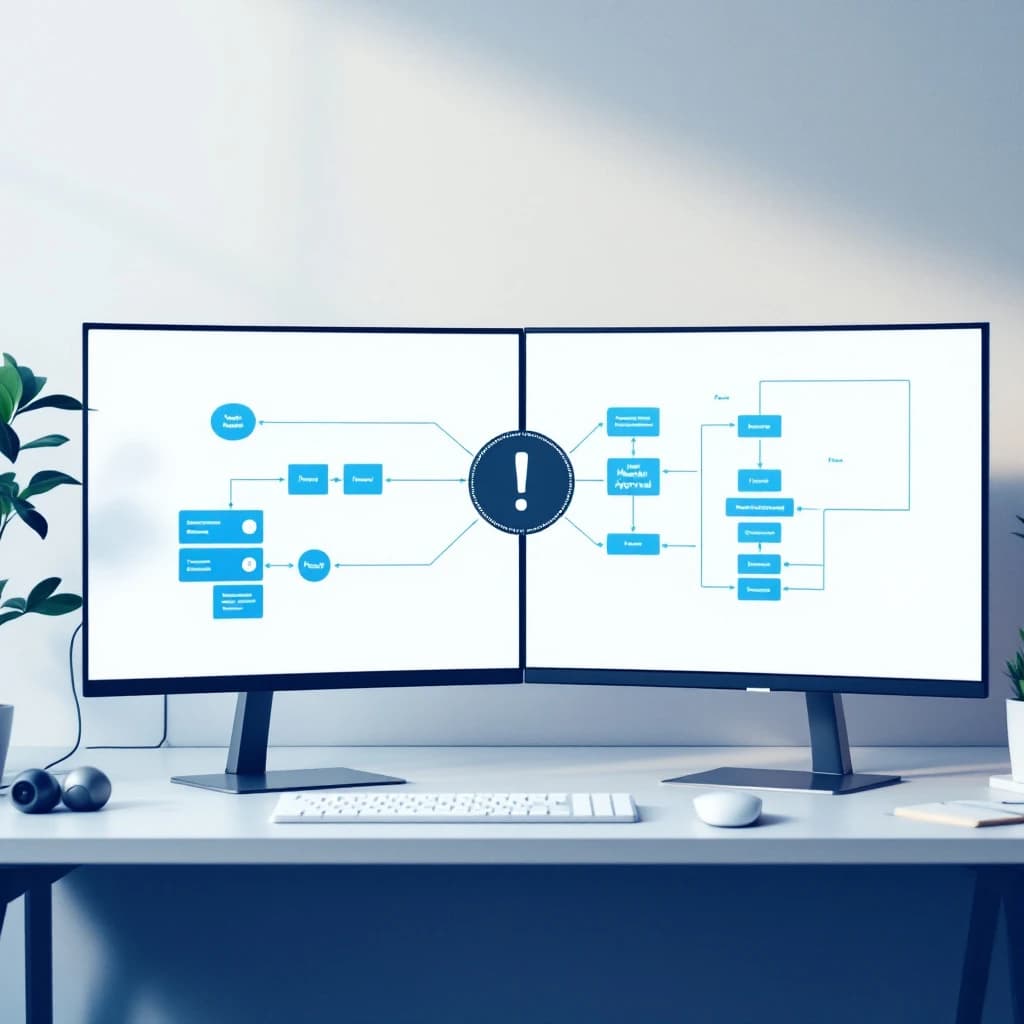
How to Build Human in the Loop AI Agent with LangGraph
Learn how to build production-ready AI agents with human oversight using LangGraph's interrupt() function and SqliteSaver checkpoints. This tutorial shows you how to pause agent execution at critical decision points, persist state across sessions, and resume workflows after human approval. Master the HITL pattern now required in 60% of senior AI engineer roles.

How to Build Hybrid RAG System with Knowledge Graph
Building a hybrid RAG system combines vector search with knowledge graph retrieval to handle different query types intelligently. A query router analyzes incoming questions and directs relationship-based queries to your knowledge graph while sending factual lookups to vector search. This architecture requires a vector database, graph database, routing logic, and tuning to overcome basic RAG limitations.

How to Build an LLM Knowledge Base for Your Team
Building an LLM-queryable knowledge base for your team means creating a system that automatically captures what your team knows, stores it in a searchable format, and lets anyone ask questions in plain English to get answers instantly. This guide walks you through the three essential components: automatic capture tools, retrieval methods, and LLM interfaces that your team will actually use.
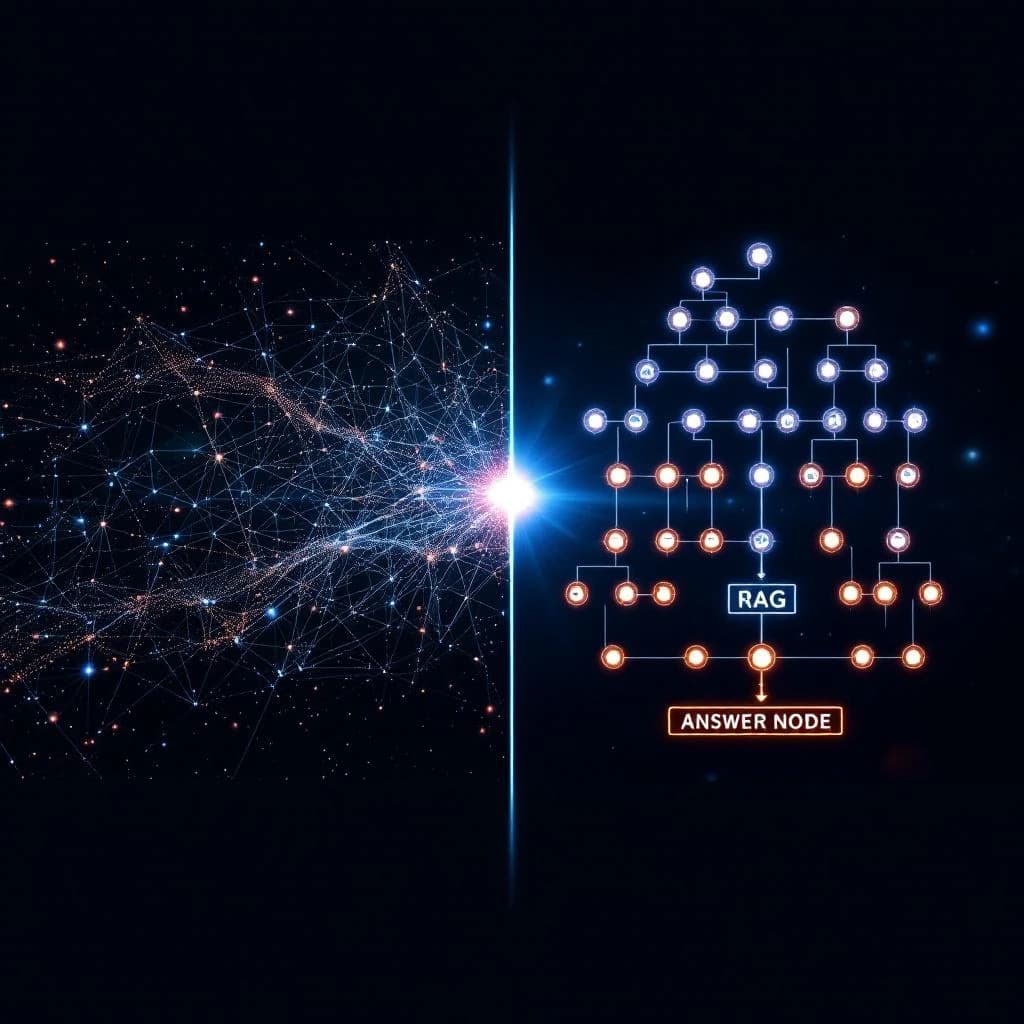
How to Build Vectorless RAG with PageIndex for Accuracy
Traditional RAG systems hit 60% accuracy walls on complex documents because vector embeddings struggle with nuanced queries. PageIndex offers a vectorless alternative using semantic tree structures that let LLMs reason about document sections, achieving 98.7% accuracy on FinanceBench. This guide shows you how to build vectorless RAG systems that eliminate chunking, embedding, and vector search challenges.