Insights on AI, SEO & Digital Marketing

How to Build an AI Knowledge Base That Captures Context
Building an automated AI knowledge base means creating a system that captures context from your meetings, code commits, Slack threads, and project notes, then makes all of it queryable by AI agents without manual intervention. This guide shows you how to set up source mapping, automate synchronization, choose the right retrieval methods, and integrate everything with AI agents that can autonomously search your knowledge.

How to Train Claude AI on Your LinkedIn Writing Style
Train Claude AI to write LinkedIn posts that sound exactly like you by extracting your post history with Apify and creating a custom style analysis. This three-step workflow teaches Claude your patterns, tone, and structure so new AI-generated content matches what already resonates with your audience. The setup takes 2-3 hours initially, then just 15 minutes monthly to maintain.

How to Build AI Agents That Critique and Improve Work
The Reflexion pattern enables AI agents to automatically critique and improve their own outputs through a generator-critic-orchestrator loop. This guide shows you how to implement this three-component architecture, from defining scoring rubrics to managing iteration costs, with practical examples that deliver 35-60% quality improvements over single-shot generation.

How to Run Multiple LLMs on One GPU Without Memory Errors
Running multiple LLM processes on a single GPU causes CUDA out of memory errors because each process reserves its full KV cache upfront. Connection admission control solves this by checking available GPU capacity before allowing new processes to start, preventing memory overcommitment and crashes. Learn practical techniques to run multiple AI models on limited GPU memory without failures.

How to Fine Tune AI Models Without Full Fine Tuning Cost
If you're trying to customize a large language model but full fine-tuning would cost thousands of dollars in GPU compute, you've got practical alternatives. LoRA, QLoRA, and prompt tuning reduce training costs by 70-95% compared to full fine-tuning while still delivering meaningful model customization.

Klaviyo AI Features Review for DTC Brands (2026)
Klaviyo's AI features split into segment suggestions that save money in month one, and predictive analytics that require specific conditions to break even. For DTC brands doing $5M-$20M with 200+ SKUs, the AI upgrade pays for itself through better segmentation alone. Below that threshold, you're funding Klaviyo's model training more than your own margin.

How to Use AI Coding Assistants to Write Data Pipeline Tests
AI coding assistants can cut test-writing time for data pipelines by 60-70% during onboarding, but only if you understand what they can and can't do. This guide shows you exactly how to set up your environment, use tools like Cursor and GitHub Copilot for data pipeline testing, and manually verify the parts AI gets wrong.

Why Ecommerce AI Personalization Doesn't Work for AOV
Your ecommerce AI personalization isn't working because you're measuring clicks on recommended products instead of incremental dollars per transaction. Most personalization platforms can't tell the difference between a sale their algorithm influenced and one that would've happened anyway. Learn why engagement metrics don't equal revenue growth and what actually increases AOV.

How to Build AI Coding Agent Loops That Self Verify
Stop babysitting your AI coding agents through every iteration. Self-verifying agent loops let your coding assistant generate code, run tests, check results against goal criteria, and iterate autonomously until verification passes. This guide shows you how to set up goal commands, automated verification, and multi-step review processes that ship working code without constant supervision.

What AI Model Architectures You Need to Build with AI
When building with AI, understanding model architectures like decoder-only transformers, Mixture of Experts, and state-space models helps you choose the right model and predict performance. These blueprints determine context windows, inference speed, cost per token, and whether a model fits your use case.

How to Make RAG Work with PDFs That Have Charts
Traditional RAG systems fail when PDFs contain charts, tables, and visual data because text-only embeddings ignore layout and images. Vision-based retrieval using ColPali and multimodal models solves this by treating PDF pages as images and creating embeddings that understand both text and visual structure, enabling your RAG system to answer questions about charts and complex documents.

How Much Does AI Consulting Cost for a Shopify Store?
AI consulting for a Shopify store typically costs $8,000 to $25,000 for scoped projects like catalog enrichment or return triage, $30,000 to $70,000 annually for fractional AI operations, or $80,000+ for ongoing agency engagements. Most $3M to $10M DTC brands get better ROI from fractional arrangements than one-off projects or full retainers.

How to Give Claude Browser Access for Automated Testing
You can extend Claude beyond code generation by connecting it to browser automation tools that let it take screenshots, click elements, fill forms, and run end-to-end tests autonomously. This guide walks through both Claude Code's /chrome integration and the Playwright MCP server with specific setup steps, practical use cases, and troubleshooting tips.

How to Use NotebookLM and Claude Together for Better AI
Discover how to combine NotebookLM and Claude for a fact-checked AI workflow that reduces hallucinations by 70-80%. Use NotebookLM to ground research in verified sources, then leverage Claude's advanced reasoning and writing capabilities. This two-tool approach delivers content that's both well-written and factually accurate.
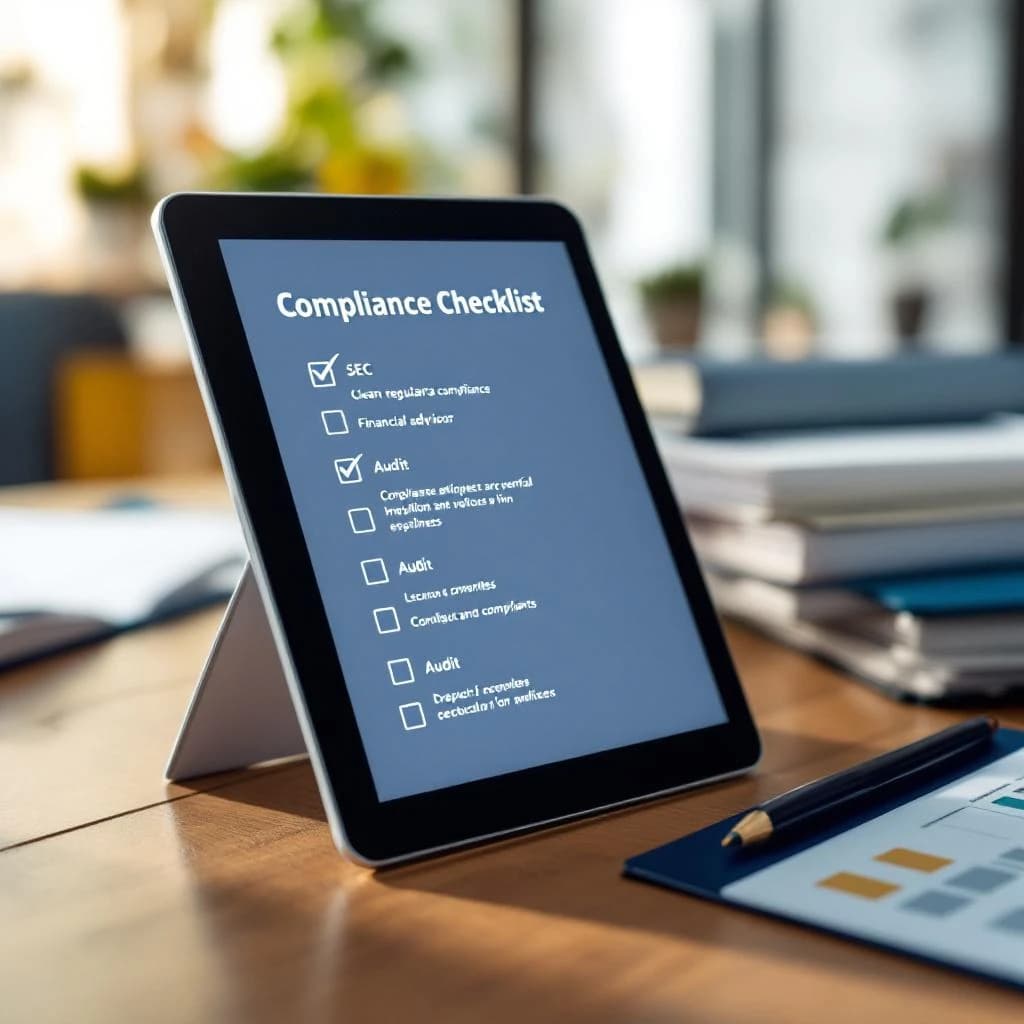
AI Tools for Financial Advisors Compliance Review
AI tools built for financial advisors now advertise compliance features, but most offer marketing-grade compliance, not audit-grade compliance. The difference matters when your CCO faces an SEC exam. Jump, Zocks, and FP Alpha are compared on what actually holds up under regulatory scrutiny, including audit trails, supervisory workflows, and books and records requirements.
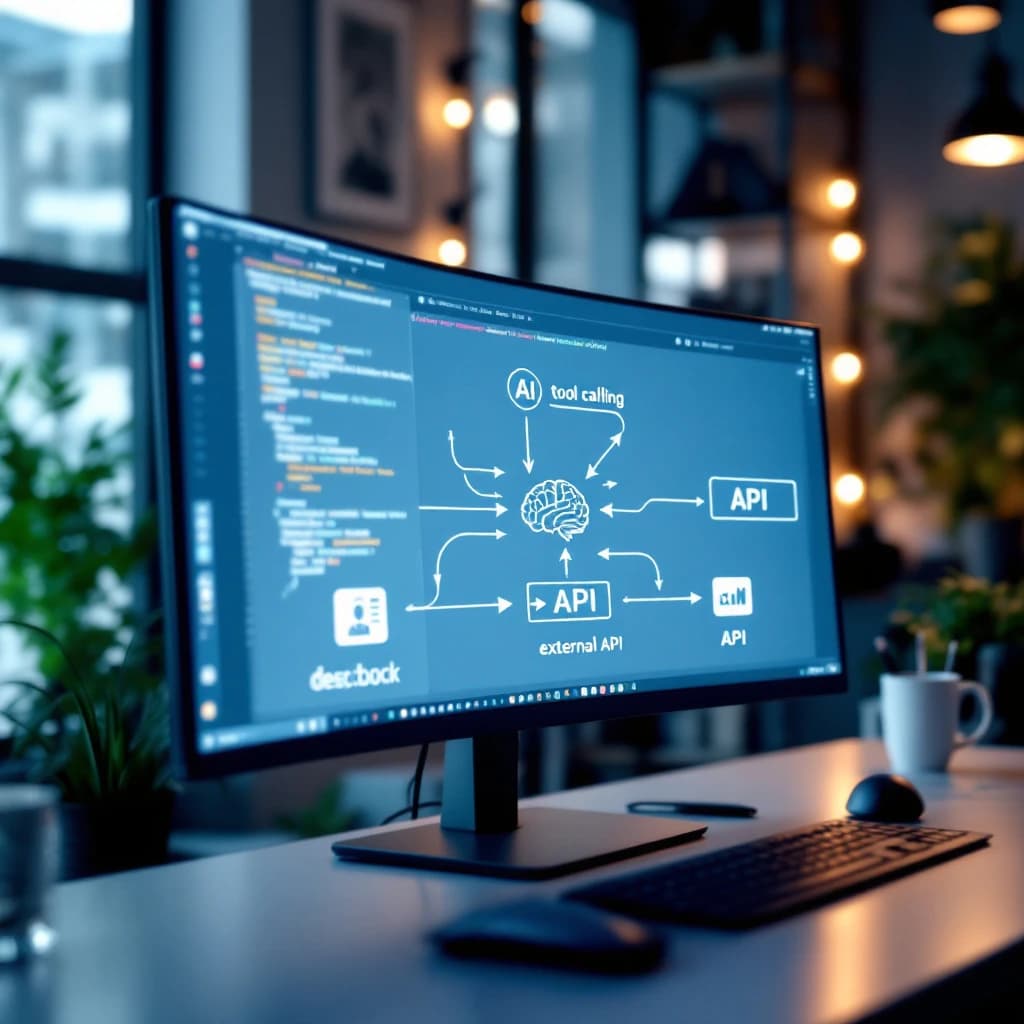
How Does Tool Calling Work in Large Language Models?
Tool calling is the mechanism that lets a large language model decide which external function to invoke and what arguments to pass, but the LLM never executes that function itself. Your application code receives the model's structured request, runs the actual function, and feeds the results back to the model. Advanced models can request multiple functions in parallel, and this capability forms the foundation for building true AI agents.

AI Compliance Failures Financial Services Audits
AI compliance failures in financial services happen when firms confuse correct-looking output with defensible audit trails. FINRA and SEC exams in late 2025 flagged AI tools that couldn't produce decision lineage under examination pressure. The core issue: documentation gaps that surface only when regulators ask questions vendors never prepared firms to answer.

How Does Memory Work in AI Agents: Complete Guide
Memory architecture in AI agents determines how your system stores, retrieves, and manages information across interactions. This guide explains cognitive architecture, memory types, CRUD operations, and retrieval strategies that transform stateless language models into agents that remember past conversations and learn from experience.

How to Build Multi-Agent Orchestration Systems for AI
Multi-agent orchestration is the architecture that coordinates multiple AI agents to solve complex problems together. This tutorial covers four core patterns—supervisor pattern, structured routing, shared state, and step caps—with working code examples and technical explanations for AI engineering interviews and production systems.
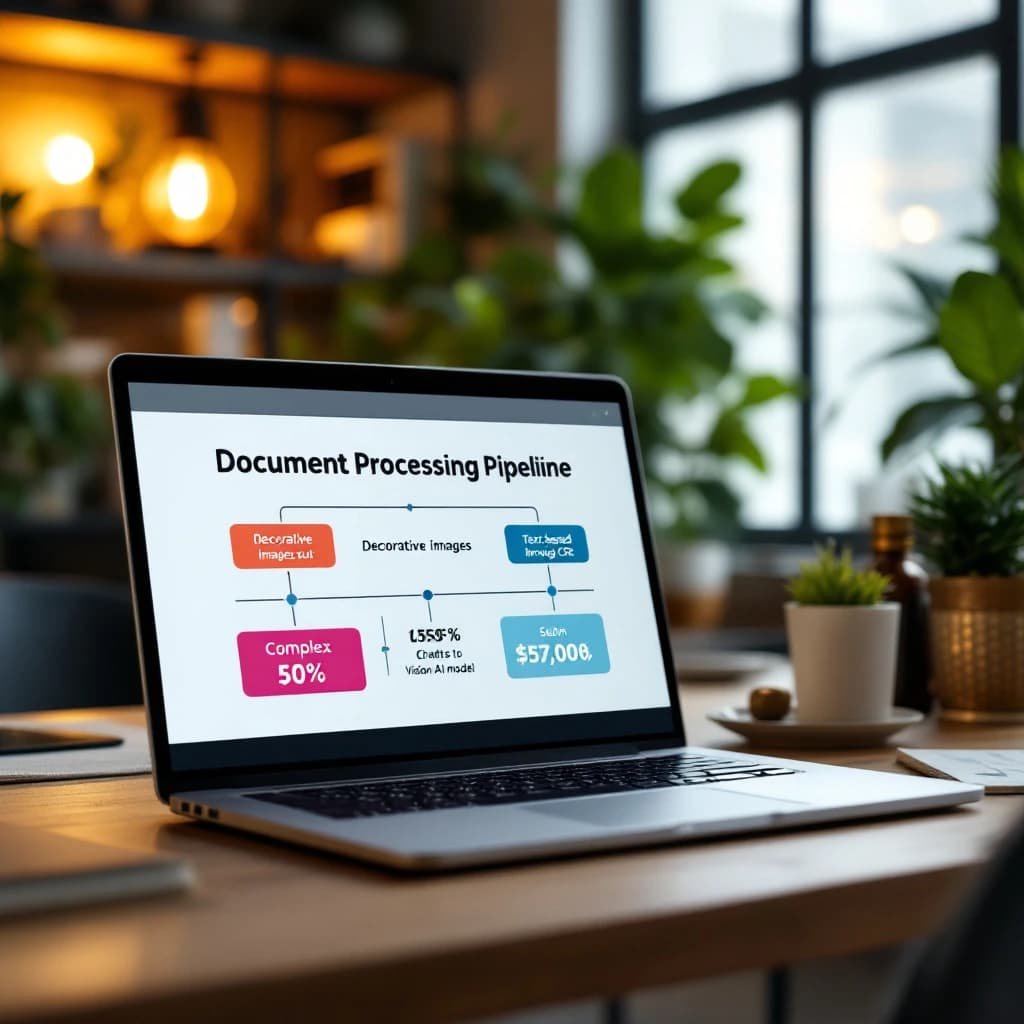
How to Optimize Image Processing in RAG Document AI
Building a RAG system that processes business documents efficiently requires smart image filtering. Most documents contain decorative logos, dividers, and text-heavy screenshots that waste vision API budget. A tiered processing pipeline using rule-based filters, local OCR, selective vision API calls, and deduplication can cut costs by 70-90% while maintaining information quality.

EasyOCR vs Docling for RAG Pipelines & Document AI
EasyOCR and Docling both extract text from PDFs, but they solve different problems. EasyOCR delivers 346 disconnected text boxes with no document structure, while Docling provides 105 organized lines, table-of-contents entries, and detected figures. If you're building RAG systems that need table extraction, section context, or multi-column layout handling, this structural difference determines whether your retrieval returns accurate results or garbage.

How Calculus Is Used in AI and Machine Learning
Derivatives measure how tiny changes to AI model parameters affect prediction error. Gradients point in the direction that improves accuracy fastest during training. The chain rule lets these changes flow backward through neural network layers, making deep learning possible.

Claude Sonnet 3.5 vs Opus 3 for Coding: Which Is Better?
Claude Sonnet 3.5 outperforms Opus 3 for most real-world coding tasks, completing multi-repository features in one shot and catching more bugs during audits. However, Sonnet 3.5 hits rate limits faster and costs more on paid subscriptions. This comparison breaks down performance, pricing, and rate limits to help you choose the right Claude AI model for your development workflow.

How Much Does AI Consulting Cost for Wealth Firms?
AI consulting for a wealth management firm typically costs between $25,000 and $200,000 depending on firm size, compliance requirements, and integration scope. Basic advisor productivity rollouts with foundational governance run $25K-$60K, while full cross-firm implementation with SEC-exam-ready compliance documentation and custodian integration pushes $80K-$200K. Most firms underestimate the compliance overhead required to build defensible governance before an audit or M&A process exposes gaps.