Insights on AI, SEO & Digital Marketing
![What Is a Data Agent and How Does It Work? [2026]](/_next/image?url=https%3A%2F%2Fcdn.eliteaiadvantage.com%2Fblog%2Fwhat-is-data-agent-how-does-it-work%2Fmpo3zsmt-mwjvun-what-is-data-agent-how-does-it-work-cover.webp&w=3840&q=75)
What Is a Data Agent and How Does It Work? [2026]
Data agents are conversational AI systems that let you ask questions about your data in plain English and get accurate answers pulled directly from your databases. Instead of learning SQL or waiting for analysts, you simply type your question and the agent converts it into queries, runs them, and returns results. They eliminate bottlenecks in traditional business intelligence workflows.

How to Use Claude and Canva to Create Instagram Carousels
Combine Claude's AI writing with Canva's design tools to create Instagram carousel posts in about 20 minutes instead of 2 hours. This workflow removes the hardest parts of carousel creation—ideation, copywriting, and structure—while keeping full control over visual branding. Content creators using this method report producing 4-6 carousels per week compared to 1-2 when working manually.

How to Run Multiple AI Agents in Parallel with LangGraph
Building a parallel AI agent system using LangGraph's Send API means setting up multiple agents that execute simultaneously rather than waiting for each other to finish. This approach can cut processing time by 5-10x compared to sequential execution, turning a 50-second workflow into a 10-second one when running five agents at once. You'll use the fan-out pattern with a routing function, independent worker agents, and a reducer node to merge results.

Why Healthcare AI Scribe Pilots Fail Silently
Healthcare AI scribe pilots fail silently with a predictable pattern: month one shows 85% provider enthusiasm, month three drops to 40% active use, and renewal conversations quietly die. The failure isn't model accuracy-it's provider adoption fatigue, EHR integration debt, and documentation drift that turns compliant notes into liability risks.

How to Prepare Your Business for AI Automation 2026
You don't need humanoid robots to prepare your business for AI automation in 2026. What you need is a clear strategy for implementing workflow automation and agentic AI systems before competitors gain efficiency advantages. Learn practical AI automation strategies that handle scheduling, customer service, and operational decisions without requiring robotics.

How to Use ChatGPT for Econometric Coding in Python R Stata
A peer-reviewed study tested ChatGPT's ability to generate econometric code across Python, R, and Stata. Python and R achieved 85-90% accuracy with minimal edits, while Stata code failed 43% of the time with syntax errors and outdated commands. Learn validation protocols to safely use AI-generated econometric code for causal inference research.

What AI Skills Should I Learn in 2026 for My Career
You need seven specific skill areas to stay relevant in AI careers through 2026: agentic workflow orchestration, MLOps/LLMOps, RAG implementation, multimodal system integration, AI cybersecurity, AI ethics and governance, and no-code automation. These aren't buzzwords—they're the technical capabilities companies are hiring for right now. Each one has a clear learning path you can start today.

How to Improve Claude Coding Accuracy: Karpathy 65-Line File
Discover how Andre Karpathy's 65-line configuration file boosts Claude's coding accuracy from 65% to 94%. This system prompt implements structured thinking protocols, output formatting rules, and quality gates that address core LLM coding failures. Learn the exact method to make Claude write more reliable, testable code.

How Much Does AI Cost for Independent Medical Practice 2026
AI tools for independent medical practices cost between $600 and $4,800 per provider annually, depending on which workflows you automate. Ambient scribes run $50-$200/provider/month, intake automation costs $8K-$30K to deploy, and revenue cycle AI sits at $15K-$45K upfront for a 15-provider practice. The real question isn't whether AI saves money, it's which category pays back fastest and which vendors won't create HIPAA liability three months after go-live.

How to Avoid AI Vendor Lock-In with OpenAI & Anthropic
Building a multi-vendor AI strategy means using both OpenAI and Anthropic models in your tech stack instead of betting everything on one provider. You'll route different tasks to different models based on their strengths, implement API abstraction layers to switch between providers without rewriting code, and create fallback systems that keep your operations running when one vendor has an outage or pricing change.
How to Build an AI Agent in Python: Beginner Guide
Build your first AI agent in Python in under 30 minutes with this beginner-friendly step-by-step guide. Learn the key differences between AI agents and chatbots, set up OpenRouter API, and create an autonomous agent capable of reasoning and independent action. No prior AI experience required.

How to Reduce Claude API Token Usage & Costs Free
LLMLingua is a free, open-source tool that compresses Claude prompts by up to 92% while maintaining response quality, potentially saving you hundreds of dollars monthly on API costs. This guide shows you exactly how to install, configure, and use LLMLingua to cut your Claude token consumption without sacrificing output quality.

How to Add Persistent Memory to AI Chatbot with Mem0
Most AI chatbots reset after every session, forcing users to repeat themselves and burning through expensive tokens. Mem0 paired with Qdrant gives your chatbot persistent memory by extracting conversation facts, storing them as vectors locally, and injecting relevant context into new sessions automatically.

AI Demand Forecasting Manufacturing Review Mid-Market
AI demand forecasting for manufacturing is a $50K to $500K decision most mid-market plants get wrong by comparing tools in vendor demos instead of mapping SKU patterns to forecast methods first. This honest review covers o9 Solutions, ToolsGroup, and Microsoft Dynamics 365 AI forecast capabilities, showing which platforms deliver ROI for operations under $300M and how to calculate actual forecast accuracy improvement by SKU category.

How Social Media Algorithms Work to Personalize Feed
Your social media feed changes after just a few clicks because recommendation algorithms use collaborative filtering, content-based filtering, cosine similarity, and recency weighting. These systems can flip your feed from 13% political content to 40% overnight based on a handful of interactions. Discover the four core techniques that determine what you see next.

How to Use Self-Learning Browser for AI Agents
Browser automation tools that learn from their own mistakes are changing how developers build AI agents. The GitHub project Stagehand represents a new category: self-learning browsers that save error corrections as reusable skills, so your AI agents don't repeat the same debugging cycles. This approach cuts repetitive debugging by roughly 60-70% in production workflows where agents interact with dynamic web applications.

How to Prepare Your Business for Google Spark AI Agent
Google Spark is an autonomous AI agent launching to 900 million Google Workspace users that monitors your emails, calendar, and documents 24/7 to complete tasks proactively. Before this mass rollout, you need to audit data permissions, configure admin settings, and map business tasks to prevent data exposure. This guide provides concrete steps to prepare your business in the next 30 days.
How to Build AI Analytics Agent That Doesn't Hallucinate
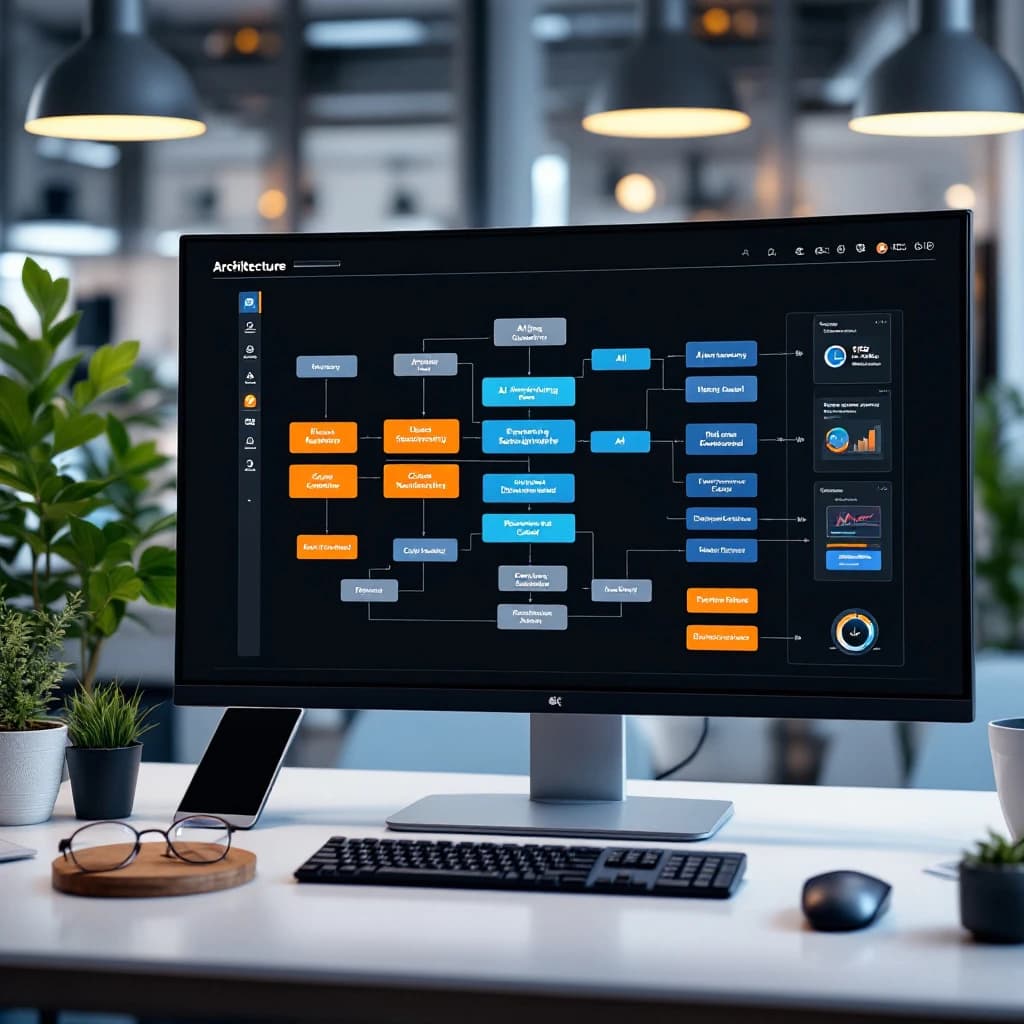
Building an AI analytics agent that doesn't hallucinate data requires a hybrid architecture that separates LLM reasoning from deterministic code execution. The LLM translates natural language queries into structured specifications, while a deterministic engine runs pre-written code against your data. This prevents the agent from inventing numbers or improvising transformations, ensuring reliable enterprise analytics.

How to Prepare Data Before Training ML Models Step by Step
Data preparation accounts for 70% of successful machine learning projects, yet most beginners rush through it. This step-by-step guide shows you how to clean data, engineer features, and scale values before training any ML model. Master these fundamentals and even simple models will outperform complex ones trained on messy data.

How to Evaluate RAG Pipeline Accuracy with RAGAS Metrics
RAGAS provides four essential metrics to evaluate RAG pipeline accuracy: Faithfulness, Answer Relevancy, Context Precision, and Context Recall. Two metrics work without ground truth data, enabling immediate production evaluation. This guide demonstrates how to implement RAGAS evaluation, interpret scores, and diagnose pipeline failures before deployment.

How to Run AI Models Locally on Laptop for Business
You can run powerful AI models directly on your laptop without sending data to ChatGPT or Claude, cutting costs to zero for routine tasks while keeping sensitive information on your own hardware. Small language models like Microsoft's Phi-4-mini deliver quality comparable to GPT-3.5 for 60-80% of common business tasks. The setup takes about 30 minutes, requires no coding experience, and works on most laptops from the past three years.

How to Use Claude AI for Data Science & Engineering
Claude AI can turn CSV files into interactive dashboards in under 10 minutes, write sprint tickets from plain English descriptions, and debug data pipelines faster than traditional methods. This guide shows you exactly how to use Claude for three high-value data science workflows: dashboard creation, sprint planning automation, and pipeline debugging.

How Does AI Predictive Maintenance Work? Explained
AI predictive maintenance works by collecting real-time sensor data from critical equipment, feeding it into trained models that recognize failure patterns, and generating prioritized maintenance alerts before breakdowns occur. The system combines vibration sensors, thermal cameras, and acoustic monitors with sensor fusion algorithms to produce confidence scores that tell maintenance teams which assets need attention and when.

How Does AI Vulnerability Scanning Work vs Traditional Tools
AI-powered vulnerability scanners like Anthropic's Glasswing analyze entire systems holistically rather than checking predetermined threat lists. Traditional security tools scan for known vulnerabilities using signature databases, missing novel threats that AI detection catches. Organizations now need AI-powered security scanning alongside conventional tools to catch threats that slip through standard assessments.