Insights on AI, SEO & Digital Marketing

Can LLMs Replace Survey Respondents? Research Limits
LLMs like GPT-4 and Claude can predict average survey responses with 1% accuracy, but they catastrophically fail to capture the full range of human opinion diversity. Research shows these models collapse real distributions into artificially narrow windows, making them unreliable replacements for human respondents without understanding the causes and fixes.

Tulip vs Augury Review Manufacturing: Which to Buy?
Tulip and Augury solve different manufacturing problems but often appear on the same shortlists. Tulip digitizes frontline operations and work instructions for process consistency, while Augury predicts equipment failures using vibration sensors. This review breaks down ROI, deployment timelines, and which platform addresses your actual cash bleed.

iFixAi Review, the Open-Source AI Misalignment Diagnostic With One Unusually Honest Design Choice
iFixAi runs 32 alignment inspections against your AI agents in about five minutes, and refuses to score one vendor against another unless you supply credentials for both. The second part is the story.

What Is MCP Protocol & How to Use It for AI Tools
Model Context Protocol (MCP) lets you connect your data sources once and use them with any AI model—Claude, GPT-4, Gemini, or future tools. Instead of rebuilding integrations every time you switch models, MCP creates a standard layer between your information and AI applications. Learn how this protocol future-proofs your AI infrastructure and eliminates vendor lock-in.

How to Ground LLMs with Real Time Web Data
You solve the stale data problem in production LLM systems by grounding your model with live web context at query time, not training time. This means fetching fresh external data via search APIs or databases right before the LLM generates a response. Learn the three main patterns—Search-First, Tool Use, and Agentic Loop—and how to choose the right approach for your use case.

How to Build AI Agent Projects for Task Automation
Building AI agent projects means creating autonomous systems that complete multi-step tasks without constant human input. This guide walks you through six essential agent types including task trackers, research assistants, email handlers, content creators, data analysis agents, and multi-agent managers. Each project includes implementation steps for both no-code tools and advanced frameworks like LangChain and CrewAI.

How to Debug and Monitor AI Agents with LangSmith
Building AI agents without observability means debugging black boxes. LangSmith automatically traces every LLM call, tracks token costs per request, and logs full input/output data so you can catch errors before production. This guide shows you how to set up LangSmith tracing, monitor costs in real time, and debug multi-step agent workflows effectively.

Why Manufacturing AI Vision Projects Fail in Production
Manufacturing AI vision projects fail in production when controlled demo conditions vanish during real operations. Lighting changes, label drift, and unmaintained retraining loops cause models that worked in vendor labs to fail silently on production lines. These failures stem from scoping and contract problems, not technology limitations.

What Are Recursive Language Models and How Do They Work
Recursive Language Models (RLMs) solve context window bloat in multi-agent systems by passing results by reference instead of value. This scaffolding pattern achieves roughly 90% KV cache hit rates and enables unbounded outputs limited only by Python's memory. Learn how RLMs differ from traditional agentic architectures and why they matter for AI developers.

How Much Does AI Cost for Manufacturing Companies 2026
AI consulting for manufacturing companies typically costs $25,000 to $80,000 for focused pilots and $150,000 to $400,000 for plant-wide deployment in 2026. The range depends on use case economics, data cleanliness, and integration complexity. Most vendors quote vague ranges without explaining where the money actually goes-here's the CFO-ready breakdown.

What Is a Forward Deployed Engineer in AI Companies
Forward-deployed engineers in AI companies work on-site with clients to implement, customize, and troubleshoot AI systems in real production environments. Unlike traditional software engineers, they spend 40-60% of their time at customer locations turning AI demos into working solutions. Demand is surging because AI products need heavy customization and hands-on problem-solving that can't happen remotely.

How to Get Help Implementing AI in Your Business 2026
When you're ready to move AI from pilot projects to production, you face a few paths: vendor-specific deployment services, independent consultants, or building an in-house team. Each path carries distinct trade-offs in cost, flexibility, and vendor lock-in. The right choice depends on whether your use cases will outgrow a single platform and how quickly you need results.
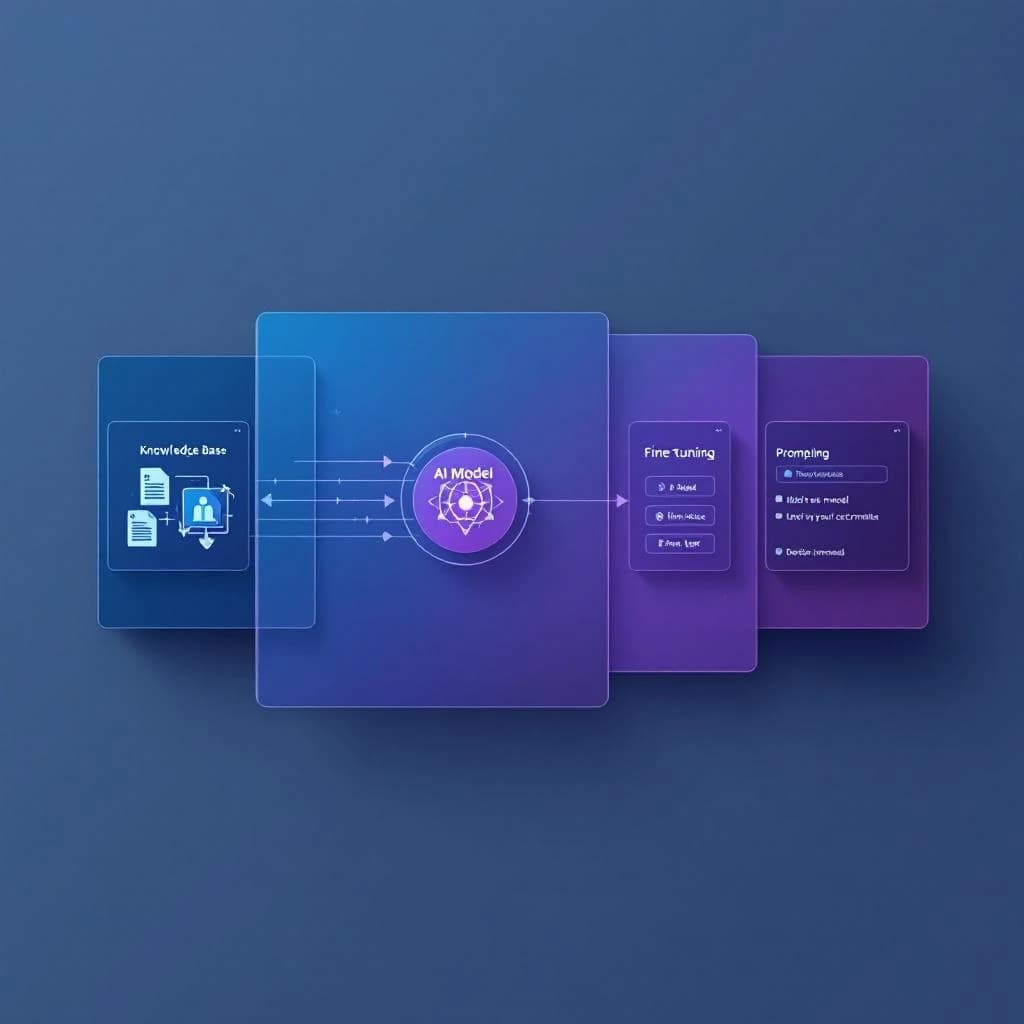
When to Use RAG vs Fine-Tuning vs Prompting for AI
Choosing between RAG, fine-tuning, and prompt engineering depends on whether you're solving a knowledge problem or a behavior problem. RAG provides external data access, fine-tuning modifies model behavior, and prompt engineering should always be your starting point. Most production AI systems use all three techniques together for optimal results.

How to Test AI Models Before Deploying to Production
Testing AI models before production deployment requires measuring five critical dimensions: accuracy, reliability, latency, cost, and decision impact. Most AI projects fail because teams skip systematic pre-deployment testing and rely on subjective impressions. Use a quantifiable testing scorecard to validate your AI system before launch.

Best AI Tools Actually Worth Using for Productivity
You need AI tools that solve actual problems in your work, not another list of shiny apps with feature comparisons. This guide breaks down five AI tools with concrete use cases and shows you exactly where each one fits into real work. The tools worth your time fit into specific moments in your workflow: when you're stuck on a complex problem, when you're copying data between apps manually, or when you need to turn written content into audio.
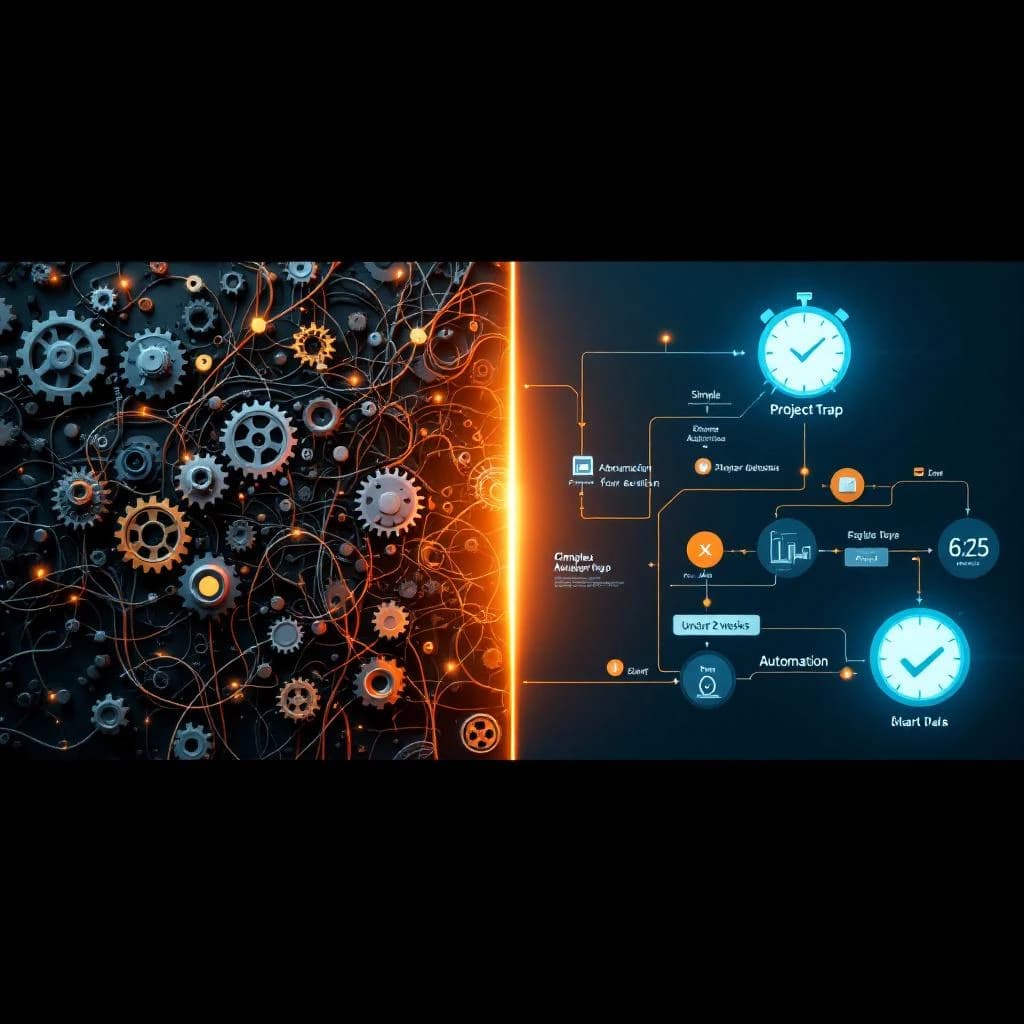
What Should I Automate First with AI? Quick-Win Guide
Your first AI automation should pass a two-part test: deploy and measure real impact in under 10 business days, and teach you a repeatable pattern for automation #2. The right first project isn't your biggest pain point—it's the one that builds organizational muscle, proves ROI to skeptics, and creates a reusable template.

AI Tools Independent Schools Heads Should Buy in 2025
Heads of school need a clear AI buying sequence for 2025: admissions triage tools that cut first-read time by 40%, advancement automation that turns donor conversations into CRM updates, and schedule optimization that solves block-scheduling challenges. This guide prioritizes back-office AI tools that deploy fast, avoid parent permission hurdles, and deliver measurable ROI before expanding to student-facing applications.

How to Get Employees to Use AI Tools: Fix Adoption Fast
Getting employees to use AI tools isn't about better training—it's about fixing the structural collision between how people work and how you're asking them to adopt the tool. When you bolt AI onto existing workflows instead of replacing a specific painful task, usage drops to near-zero within 30 days. The fix requires starting with volunteers who have the exact pain point your tool solves and tracking leading indicators that predict real adoption.

How Often Is AI Wrong and How to Handle It Effectively
AI error rates range from 5% for data extraction to over 40% for creative work. The real danger isn't frequency—it's confident, plausible outputs that look perfect until they cause damage. Learn three specific checkpoints to catch AI mistakes before they reach customers or executives.
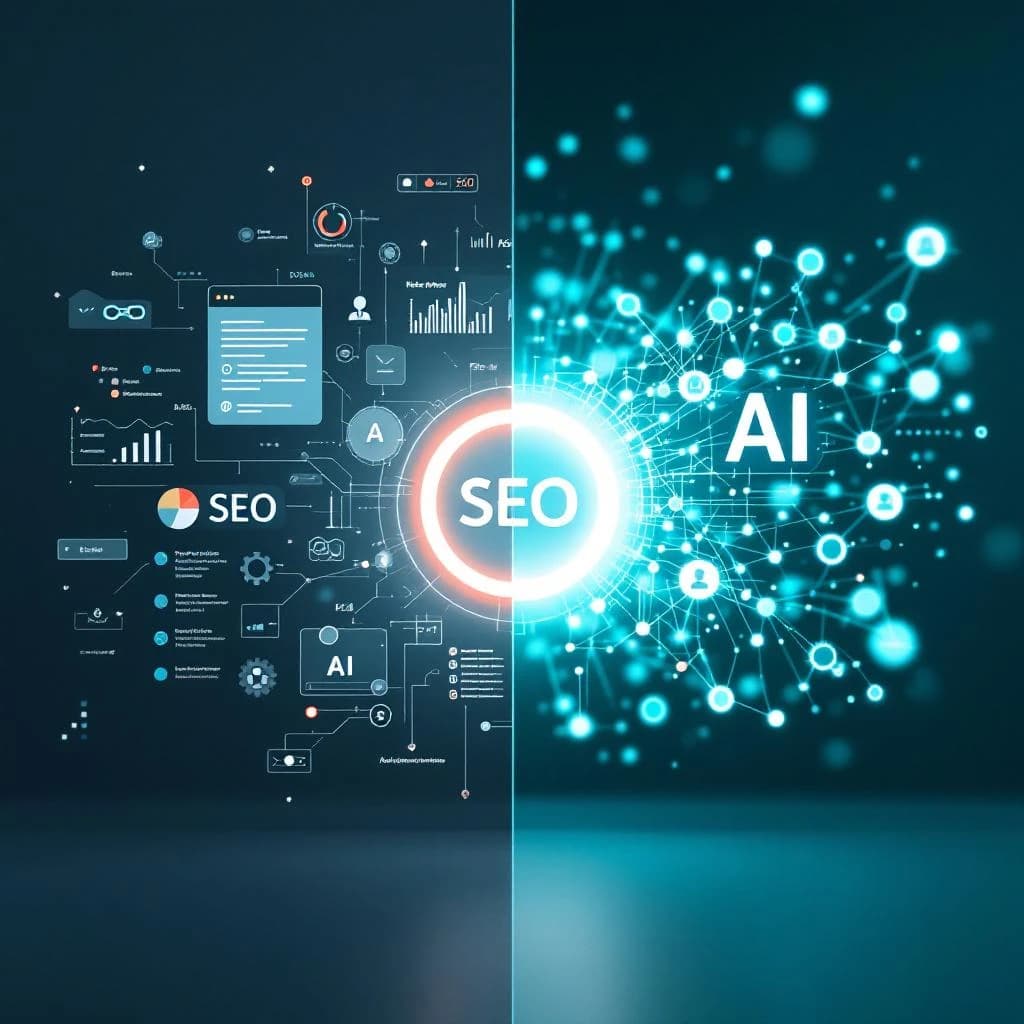
Is AI SEO Different from Traditional SEO? 2026 Truth
AI SEO is different from traditional SEO, but not in the ways most vendors claim. The real shift is how search engines now surface answers through AI-generated summaries and citation graphs instead of just ranking blue links. You're now optimizing for traditional search results and AI Overview boxes that appear above them.

Will AI Replace My Employees? What Small Businesses Need to Know
AI won't replace your employees the way vendors pitch it. Instead, it changes what your team spends time on—handling specific tasks within roles, not entire roles. The real question is whether your team's capacity gets redirected to higher-value work or you're chasing a headcount cut that'll never materialize.

Why Small Business AI Pilots Fail (And How to Fix It)
Small business AI pilots fail because of people problems disguised as technology problems. Executive sponsor ghosting, power user traps, and late compliance vetoes kill adoption by week six. After 140+ implementations, the pattern is consistent: the technical decision was usually fine, but the change management wasn't.

Who Owns AI Generated Content? Rights & Legal Guide
You own the output from most major AI tools when you use them for business, but that's not the same as owning the copyright or having exclusive rights to it. Under current U.S. copyright law, AI-generated content isn't eligible for copyright protection because it lacks human authorship. Learn what you actually get when you use ChatGPT, Claude, or Midjourney output in your marketing materials.

Do You Need a Developer to Use AI? When to Hire Help
You don't need a developer to start using AI in your business, but you'll likely need one when you hit specific technical ceilings. Most small and mid-market businesses can accomplish 60-70% of their AI goals using no-code platforms. The question isn't whether to use a developer, it's when.